
Be honest.
If someone came up to you and said they saw a man on a downtown street randomly guess a card from a deck—and not only that, make it reappear as light across the panels of a skyscraper—you’d probably think they were crazy. Maybe even unstable.
Had we not just seen it ourselves, we would have a hard time believing it, and yet, despite watching his every move—scanning the deck, the crowd, and his hands—he disrupts everything we thought we knew about sleight-of-hand magic like a card trick pulled from behind someone’s ear or pocket.
How does one even begin to explain that?
We question what we saw… yet how often do we even think to question how we were led to see it that way?
We call it magic… when we don’t have an explanation yet—

What if I told you, that the most powerful part of his magic act, had nothing to do with the trick itself…but in how the story was constructed?
But…don’t take my word for it, let me show you.
What he’s describing isn’t just magic. It’s something far more deliberate.
We think that by looking more intently, by focusing on every move, we are in control of our gaze—but in reality, we rarely think to question what captured our attention in the first place.
And that’s precisely why the illusion works.
Because the moment your attention is caught, your gaze follows. What feels like a decision is really a reaction. You’re not choosing what to see—you’re responding to what’s already been placed in front of you.
That’s why the more closely you look, the less you see.
If that moment, where a single card vanished and reappeared across a skyscraper—felt impossible…watch what Daniel his fellow horsemen do next.
The moment he says, “we’re going to rob a bank,” something shifts. Not just in the room—but in us. It sounds impossible, almost ridiculous, and yet that’s exactly what captures our attention.
How could that even be done?
That question pulls us into curiosity, and curiosity turns into engagement. It feels like we’re choosing to follow along—but are we?
Because if we are, then have we stopped to consider what we’re actually agreeing to in that moment—participating in a live bank robbery?
Before we ever ask how they could possibly pull it off, we’ve already accepted that they will. The spectacle reframes the act itself. A bank robbery, stripped of its consequences and repackaged as entertainment, no longer feels threatening—it feels thrilling.
It creates a kind of cognitive dissonance: we know it’s wrong logically, yet we don’t experience it that way. It feels safe—even harmless.
And that’s the real question this moment raises—not how they’ll rob the bank, but why everyone in the room is so willing to go along with it.
And that’s where the shift happens. Not in the trick… but in how it’s presented.
The story that a person could be transported across the world, rob a bank within minutes, and return without consequence begins to fall apart the moment Detective Rhodes is pulled beneath the stage, landing in what appears to be a bank vault. Just like that, part of the illusion is resolved. It reinforces what we suspected all along—but couldn’t prove: this wasn’t a real heist.
Knowing it was constructed doesn’t undo how convincing it was to watch unfold. If anything, we’re left even more impressed.
Because if what we saw wasn’t where the trick was happening…
then where was the real act happening this whole time?
What starts to surface here isn’t just how the trick was done and by whom, like an APA citation, it also informs us how far back it actually began.
Nothing about this was magic show is as spontaneous as it appeared. Not the seat, nor the selection of their audience and most certainly not even the Frenchman himself.
What looked like a random selection on stage was anything but. It was patterned, repeated, and reinforced—until it felt like his own decision (that’s not even the terrifying part by the way). That’s what makes this different from the illusion we saw before.
Because this time, the attention isn’t captured in a single moment like the theatrics and showmanship; rather it’s built over time.
Not only quietly, but deliberately. Without ever announcing itself as the trick. Which raises a different kind of question.
If nothing was left to chance…then how much of this was ever really a choice to begin with?

So far, we’ve seen what looks like impressive magic—tricks that capture attention, create confusion, and then offer just enough explanation to make sense of what we’ve witnessed. So what makes story construction any more powerful than the trick itself?
I would tell you, but I’d rather show you.
What if I told you that the one trick you dismissed as a failure… was the only one that actually worked?
This scene from the film was strategically selected because the trick that happens is both obvious and not obvious. It’s not flashy—like making a card disappear in the middle of downtown and having it reappear across the skyline of a skyscraper. It’s not as thrilling as robbing a bank in Paris from a stage in Vegas.
So… tell me, what did you think of Alma’s “magic” trick?
Not the second one—the one where she surprised even herself by pulling it off.
The first one.
The one she fumbled.
The one where the card somehow ended up on the passenger next to her.
I’ll give you a second—go back and rewatch the first 42 seconds of that clip.
Now that you’ve seen it again, you might be thinking: what’s the big deal? How is that a magic trick? She didn’t even guess his card correctly… and somehow the real card ends up behind her, on a sleeping passenger’s lap?
Pause for a moment.
How did the Red 3 of Diamonds get there?
If you go back and watch that clip, all we see—through the frame of the camera—is Alma sitting in the middle. Her eyes are preoccupied with the deck, occasionally lifting to meet Detective Rhodes. Naturally, your attention follows her hands. You watch her shuffle. You watch her attempt the trick.
But what if that was the point?
What if the trick wasn’t the one she “completed”… but the one you assumed didn’t work?
If you go back again, you’ll notice something else. Detective Rhodes begins the conversation by suggesting there must be a fifth Horseman—someone powerful enough to fund the illusion.
Meanwhile, Alma has her back turned to the sleeping passenger.
The only one with a clear view?
Rhodes.
Now go even further back—to the start of the scene.
The PA announcement says, “We’re arriving a bit early, so sit back and relax as we prepare to land on the Big Easy.”
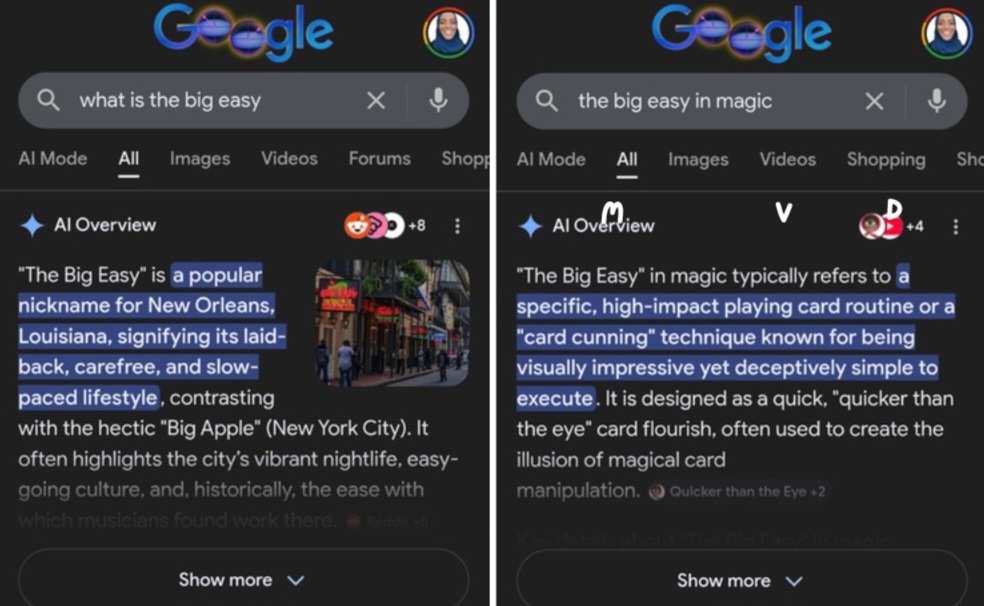
That’s strange.
Pilots don’t usually tell passengers to sit back and relax during landing—they say that before takeoff. So why here?
And where else do we hear that phrase?
At the beginning of a magic act.
“Sit back. Relax.”
The magician is about to direct your attention.
You see, in storytelling, the writer does this through the narrator’s point of view and in film, the director does it through the camera.
And here, the camera starts with an audience view—the passengers—before quickly shifting toward the “magician” and her “assistant.”
We just don’t register it that way… because they’re dressed in badges and suits.
So let me ask you something.
What is the purpose of performing a trick that no one notices?
Unless…
We were never meant to notice it in that moment.
That’s why I chose this film specifically—because while it presents a series of impressive magic tricks, we can’t forget the medium through which those tricks are experienced: Film—which is the visual format of telling a story.
While the writer leverages magic tricks grab your attention, the directory is guiding your eyes through the camera angle quietly placing you inside the audience—without you realizing it—And that’s by design—it’s intended to not only transport you but immerse you into the world they’ve created. Many times we confuse that immersion for participation.
This isn’t a magic show.
Feeling like an audience member doesn’t mean you actually were one.
Just like the bank in Paris wasn’t robbed on a Vegas stage.
You are still a viewer.
And the tape is still rolling.
The magic show is only one part of a much larger narrative.
In storytelling, the goal isn’t always to impress you immediately. It’s to build something that only makes sense later. To plant something so obvious that it becomes invisible—knowing that when you finally see it, the realization hits harder.
When I said earlier, what if I told you that the most powerful part of the magic act had nothing to do with the trick itself, but with how the story was constructed?
A magician controls where you look. A storyteller controls how you understand what you’re looking at. That distinction matters.
The film doesn’t hide the clue. It reframes it. It assigns a tone, a category, a level of importance that encourages the audience to dismiss it before they even question it.
The result is that the audience doesn’t miss the truth because it’s invisible. They miss it because their attention was already occupied—and their interpretation was already shaped.
So the question isn’t whether the trick happened.
It’s why you didn’t recognize it when it did.
Because if a film can guide your attention so precisely that you overlook what’s right in front of you…what happens when that same principle is applied to the stories we consume every day?
With a magic trick, you walk in expecting some level of illusion.
You know there’s something you’re not seeing—with digital media, you don’t—and that’s where my work begins.

Media excerpts are used under fair dealing provisions for the purpose of criticism, review, and educational analysis. All rights remain with the original copyright holders.
~———~———~———~———~
Narrative Framing in Digital Media: How Story Construction Shapes Public Perception

Now that I have your attention, I want to personally welcome you to my DIY narrative research lab.
This is a space where ideas are developed, frameworks are tested, patterns are explored, and reflections are published.
What I’m doing here goes far beyond summarizing a movie. I’m staging an argument in real time. I’m not just telling you that narrative framing shapes perception. I’m going to prove it to you not just with evidence which range from academic, to anecdotal and most importantly experiential. That’s the key to understanding everything that follows. Where I grew up in the hood, we had a saying “walk the talk” and since this is lab, that means part of the best explanations lie in demonstrations.
From the very beginning, I’m reframing what you just experienced. When I say “frame,” I don’t just mean what the camera shows. I mean the lens through which you interpret what you’re seeing. A frame is both visual and cognitive. It’s what you’re being guided to notice, what you’re being guided to ignore, and what you’re being led to believe. So right from the start, I’m collapsing the distance between cinema and cognition. You’re not just watching a story. You’re participating in meaning-making.
📖This is exactly what Entman (1993) describes when he explains that framing works by selecting certain aspects of reality and making them more salient, guiding the audience toward specific definitions, causal interpretations, moral evaluations, and solutions.
Which means from the very beginning, your attention was never neutral. 📖Bruner (1991) explains it best when he said that we do not simply perceive reality as it is. We organize our experience through narrative, constructing meaning based on how events are presented and interpreted. Which means—meaning is already being shaped before you even realize you’re making meaning at all.
Let’s examine 🔍 our first piece of evidence—🎬: Now You See Me (Leterrier, 2013).
In Daniel Atlas’s “come closer” scene, he tells you exactly what’s happening: “the more you think you see, the easier it is to fool you”🎬(Leterrier, 2013). That line isn’t just about magic. It’s about interpretation. In the extended cut edition, Atlas builds on his premise by stating that, “you think you’re just looking, but you’re already filtering, interpreting, predicting, and constructing meaning” 🎬(Leterrier, 2013)📖(Bruner, 1991). Long before the film first came out in 2013, Bruner had arrived to the same conclusion in 1991.
So I pair that speech with a visual illusion on purpose. I want you to be amazed by the trick first, and then realize that the real manipulation wasn’t the sleight of hand. It was everything surrounding it. The structure. The setup. The way your attention was guided before the trick even began.
Because the truth is, the illusion doesn’t work because of the trick—it works because the story already positioned you to believe it.
Then I take you into the Vegas show live bank robbery scene. And here, I’m not interested in whether the trick is possible. I’m interested in you. Specifically, how quickly your position shifts. Before you walked into that scene, you would probably say you’d never support a bank robbery. And yet, within moments, you’re watching a crowd cheer for exactly that.
So what changed?
Nothing about the act itself. What changed was how it was framed. The spectacle turns crime into entertainment. The absurdity of the claim captures your attention. And once your attention is captured, your resistance softens. The act stops feeling threatening and starts feeling exciting. That’s the shift I want you to notice. You’re not just being misdirected visually. You’re being repositioned morally.
What I’m pointing to here isn’t just a “feeling”. It’s actually supported by research. The more you become immersed in a story, the more likely it is to shape what you believe outside of it.
What’s important is how does that happens. Is it because the argument is strong?
📖Green and Brock (2000) found their explanation after running multiple rounds of experiments, this was their findings: that the more someone is “transported [aka immersed] into a narrative world,” the more susceptible they become to its influence, not because the story is inherently more persuasive, but because it reduces the likelihood that they will critically evaluate what they are seeing.
The overall conclusion of the article (Brock & Green, 2000) is that stories persuade people not primarily through explicit argument, but through transportation, or deep immersion into a narrative world. Public perception is shaped not only by what a message says, but by how deeply audiences are drawn into its narrative world. This means story construction matters because it organizes attention, activates emotion, creates imagery, lowers resistance, and ultimately shifts beliefs, even when the audience knows the story may not be factual.
Now that doesn’t mean one way of processing is better than the other. It just means they are different. When you’re analyzing something, you’re evaluating it. (think Sales person, debate, ads…etc) where you get to proverbially sit and weighing arguments. What they found is that we’re being absorbed and in that state, we’re less likely to question what’s being presented to us. When someone is highly transported (deeply immersed) into a narrative (like you just were in the film Now You See Me), you become more susceptible to influence not because the story (aka the magic trick) is inherently persuasive, but because it lowers your resistance to critically evaluate it and therefore you default to adopting it.
The uncomfortable truth is that the most powerful form of manipulation is when its made to feel like it’s your choice to go along with it.
That’s where the real question begins for me: how do people come to accept what they would normally reject?
And what I’m showing you is that narrative doesn’t confront your beliefs directly. It rearranges the conditions under which you experience them. So when a story like the magic show in Vegas is exciting enough, engaging enough, emotionally satisfying, or entertaining enough, you stop questioning whether act (i.e. live bank robbery) wrong and instead interested in knowing whether the performance works.
And just like that, the standard shifts the argument. The robbery doesn’t change—what changes is how it’s experienced.
Then I take you to the Frenchman in the audience. He wasn’t a plant. He was a dupe🎬(Leterrier, 2013). But he didn’t get there in one moment. He got there through repeated exposure with subtle cues over time. So when he makes the final choice of flying from Paris to Vegas, it feels like his own. That’s the power of it. The illusion of agency is preserved. He believes he chose his seat. He believes he chose to be there. But his path was already structured.
That’s when I start connecting this to something bigger. Repetition creates familiarity. Familiarity starts to feel like truth. And when something feels familiar enough, it feels complete—even if it’s not.
As 📖 Hall (1997) explains, meaning is produced and exchanged through representation… and is actively constructed through repeated patterns of language, imagery, and discourse.
To put that into perspective for you, take the Frenchman that was (not so) randomly selected in the live bank heist in Vegas. On one level, he’s being shaped through repetition. Since he was exposed to a sequence of cues, patterns, and signals over time. This is what Hall meant that through that repetition, something starts to feel familiar. It starts to feel natural. hen there’s a second layer happening at the exact same time. Once he’s arrived to the show in Vegas, and he’s seated, the show begins, and now he’s no longer just processing information critically because he’s now been immersed and significantly hinders how he responds. 📖Green and Brock (2000) explain, “transportation into a narrative world reduces counterarguing and increases acceptance of story-consistent beliefs.”
So now, not only has his path been shaped through repetition, his resistance has also been lowered through immersion. When those two things happen together—patterning and transportation—you get something much more powerfully constructed.
Now, watch what happens with Detective Rhodes.
You trust him.
You trust him because he looks like reason. He asks questions. He’s skeptical. He seems grounded. And because of that, you stop questioning him. You borrow his perspective without realizing it. That’s what makes him powerful. He doesn’t force you to believe anything. He invites you to rest inside his way of seeing and once you do that… you stop examining the frame yourself by outsourcing it to him—this is exactly what makes him dangerous narratively.
So what I’m showing you here is that framing does not always work by giving you someone to distrust. Sometimes, it works by giving you someone you instinctively trust and once you trust the frame-bearer…you stop examining the frame itself.
🎤Adichie (2009) explains in her infamous TEDx Talk, “the single story creates stereotypes, and the problem with stereotypes is not that they are untrue, but that they are incomplete.” What you’re getting through Rhodes is not the full picture—it’s a controlled one.
And the more that perspective is reinforced, the more natural it begins to feel. As both 🎤 Adichie (2009) and 📖 Hall (1997) emphasize, “show a people as one thing, as only one thing, over and over again, and that is what they become.” The same applies here. Show a character as rational, grounded, and trustworthy over and over again, and that becomes the truth you accept.
This is also why I included the sexual banter between McKinney and Henley. On the surface, its made to feel like a “small moment, maybe even charming, something easy to overlook “chemistry”. Pay attention to wit and charisma are doing something important. They are reframing behavior that might otherwise is unquestionably inappropriate, and they are making it feel acceptable. Initially you see Henley is repulsed by McKinney’s offer. He broke the pattern of egging her on and irritating her, he switched from charisma to wit and Henley laughed. Also what he said was technically true, that sleeping with him maybe cheap and meaningless but that makes it less time consuming than the cost of emotional labour of a heartbreak she has with Atlas framed as emotionally unavailable.
The film doesn’t do this just once. It does it repeatedly.
It trains you, little by little, to accept behavior you might normally question, as long as it’s wrapped in cleverness, charm, or spectacle. The bank robbery becomes fun. The manipulation of the Frenchman becomes ingenious. The sexual pass becomes banter. Vigilante theft becomes justice.
Not because you fully agree with it, but because of how it’s presented to you that you go along with it.
What I’m showing you here is that this is not random. This is narrative framing in action (no pun intended). The film is selecting what to emphasize, what to soften, and how to position each moment so that your interpretation shifts without you realizing it 📖(Entman, 1993). At the same time, as you become more immersed in the story, your resistance lowers, and you become less likely to question what you’re seeing 📖 (Green & Brock, 2000).
If Henley as a character in a fictional film is being guided through that scene and accept the banter, you are more inclined to being habituated, slowly, into accepting a worldview you might reject outside of the theater. Not all at once. Not directly. But in small moments of micro-consents, because each of those moments is wrapped in entertainment, doesn’t feel like ethical compromises it feels like narrative pleasure.
And that’s the point.
The story isn’t just distracting you—it reveals the weakness of your stated values. Don’t get me wrong, I’m not saying that you secretly support all of these actions in your everyday life. I’m saying Your beliefs, perception, your judgment, even your sense of what feels right can be suspended, repackaged, and redirected… when the narrative conditions are right.
This isn’t just about what you see. It’s about what starts to feel reasonable, justified, or true… without you noticing when that shift happened. This film exposes is how quickly you can adopt a new moral posture when the story is emotionally satisfying enough.
At the heart of my argument is that story construction can override moral judgment—not by force, but by shaping the emotional and cognitive pathway through which that judgment happens.
And that’s why I’m bringing in these frameworks.
Framing determines what stands out and what fades into the background. Immersion lowers resistance. Storytelling aligns with how we naturally make sense of the world. Systems determine what gets repeated. And repetition shapes what starts to feel like reality.
All of these are not separate ideas, they are parts of the same mechanism and what I’m showing you through this film is how that mechanism works in real time.
At the end of the day, this isn’t about what you watched—it’s about what happened to you while you were watching.
📖Hall (1997) reminds us, meaning does not just appear. It is “actively constructed through repeated patterns of language, imagery, and discourse,” until it begins to feel natural, even inevitable. Which is exactly why 🎤 Adichie (2009) warns us that “power is the ability not just to tell the story of another person, but to make it the definitive story.”
Remember what you were given in the story (in whichever medium, books, articles, news, music, film..etc) was not the full picture—it was a guided one.
The reason you don’t notice it is because, unlike magic, storytelling doesn’t announce that a trick is being performed.
You never stopped being the audience. You just forgot you were watching—which was why I pointed you toward the magic… to distract you from the film.
This is the power in magic was never in the trick, but it was in the story that made you believe it.

About This Piece
What I realized working on this project is that I initially approached it like most academic work.
I thought my job was to explain things clearly. Define narrative framing. Support it with research. Show that I understand the material.
And I could have done that.
But the more I sat with it, the more I realized that doing that alone would actually contradict the very thing I’m trying to say.
Because if everything I’ve learned is true—if people don’t process information neutrally, if they don’t change their thinking just because you present facts, especially when they’re already immersed in a narrative—then simply explaining narrative framing isn’t enough.
Not only more importantly, it misses the point and I realized that doing that would actually contradict the very principle this course is trying to teach, which is that being an ethical and responsible communicator.
It’s about recognizing that people don’t receive information in a vacuum. They receive it through stories. Through framing. Through emotion. Through everything they’ve already been exposed to.
So my role couldn’t just be to deliver information.
I had to think about how that information is actually experienced.
That changed everything.
Because now I’m not just asking, “What do they need to know?”
I’m asking, “How are they going to encounter this? What are they going to feel? Where might they resist? Where might they lean in without realizing it?”
Something small enough that it doesn’t feel like an attack—but strong enough that it interrupts the narrative they’re already inside.
Reference
Adichie, C. N. (2009, July). The danger of a single story [Video]. TED Conferences.
Bruner, J. (1991). The narrative construction of reality. Critical Inquiry, 18(1), 1–21.
Entman, R. M. (1993). Framing: Toward clarification of a fractured paradigm. Journal of Communication, 43(4), 51–58.
Gillespie, T. (2014). The relevance of algorithms. In T. Gillespie, P. J. Boczkowski, & K. A. Foot (Eds.), Media technologies: Essays on communication, materiality, and society (pp. 167–194). MIT Press.
Green, M. C., & Brock, T. C. (2000). The role of transportation in the persuasiveness of public narratives. Journal of Personality and Social Psychology, 79(5), 701–721.
Hall, S. (1997) “Chapter 1: The work of representation” from Hall, S. Representation: Cultural Representations and Signifying Practices pp.15-64, London, UK: Sage Publications
Leterrier, L. (Director). (2013). Now You See Me [Film]. Summit Entertainment.
York, N. (2025). You Are Being Manipulated: Narrative Framing in Storytelling. Tower Room Publishing.
Zhang, Y., Sun, Y., & Wang, C.-J. (2025). Unraveling the Shape of Social Media Narratives: Analyzing the Effects of Online Interaction and Narrative Structure on Attention to Digital Asset Transactions. Journal of Broadcasting & Electronic Media, 69(3), 200–218.
