By: Shaimaa Kraba
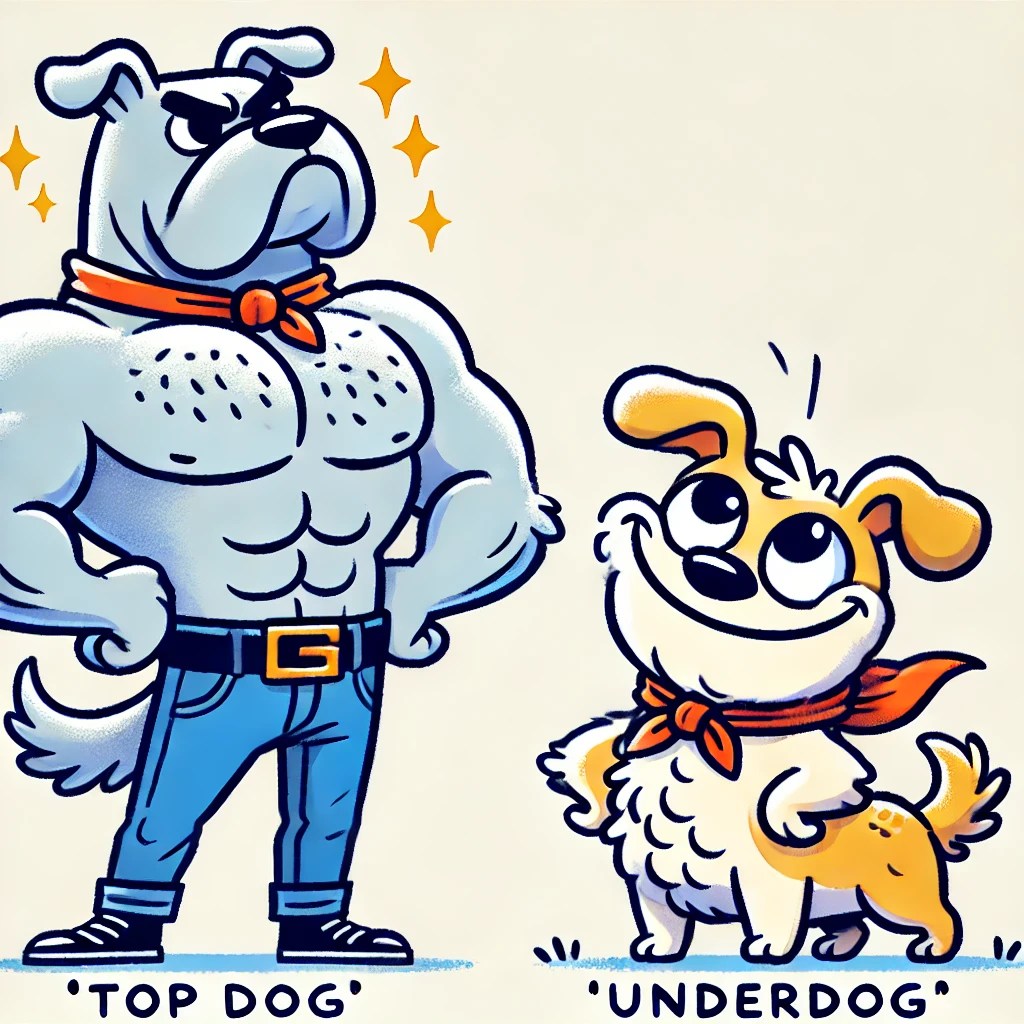
In this week’s blog, I decided to explore the “canine arena” of branding strategies between the top dog and the underdog, and what we can learn from it. Personally, I’m a bit of a tech-head, so naturally, I gravitated toward one of the most iconic rivalries in tech history: Microsoft vs. Apple. These two giants have been battling for decades, and I find it fascinating to reflect on their journey.
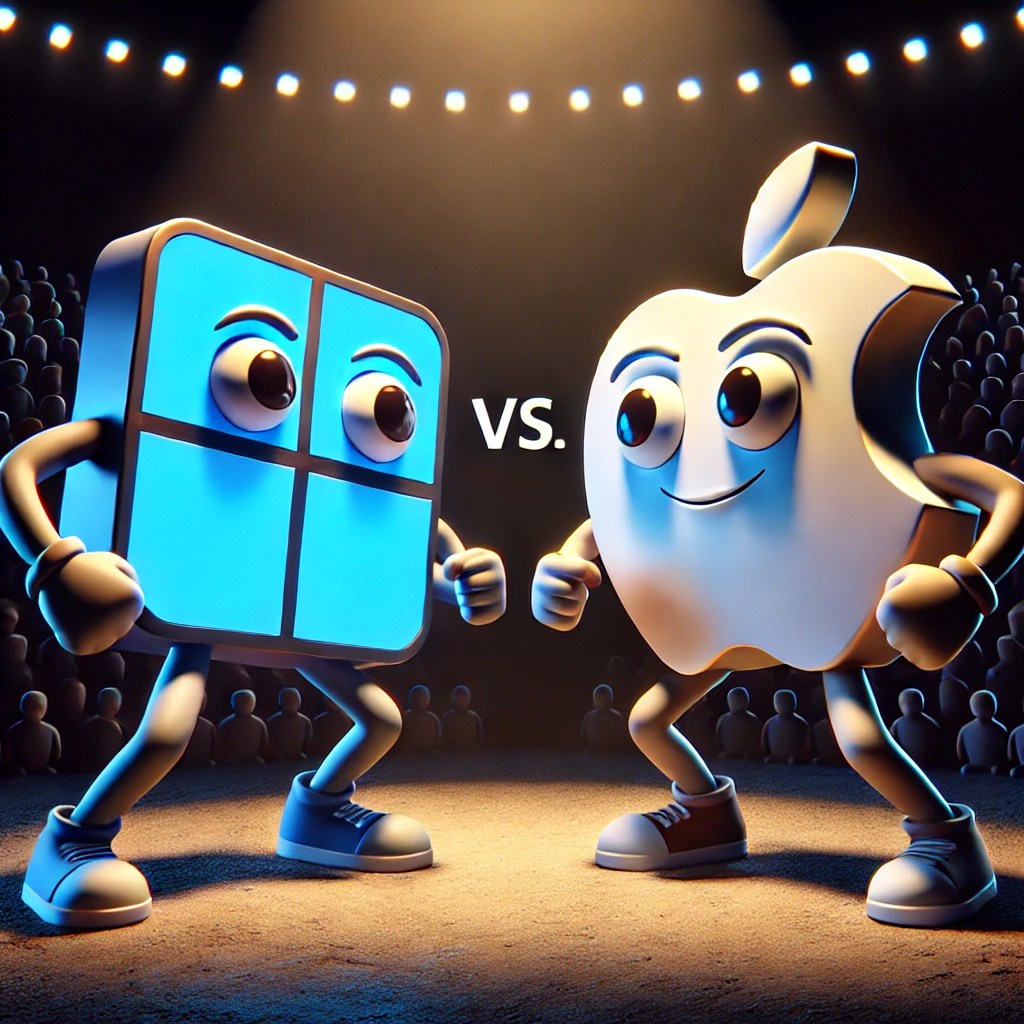
Origins and the Rivalry
Microsoft was founded on April 4, 1975, and Apple just a year later on April 1, 1976. It almost feels like an April Fool’s prank that Apple was founded on April 1st. But, looking back nearly 50 years later, both companies have clearly done well for themselves. Initially, Apple was the underdog, while Microsoft held the top spot.
Reflecting on that time, Microsoft was essentially a monopoly, which created economic and legal challenges. In fact, Microsoft had to bail Apple out of bankruptcy, ensuring that there was competition. This was critical because having only one major player in the tech space would’ve been illegal. Apple served as Microsoft’s primary competitor, ensuring the industry stayed competitive and innovative.
The Steve Jobs Factor
Steve Jobs, who at one point worked at Microsoft, eventually broke free and pursued his vision at Apple. His mantra, “Think Different,” captured his philosophy that, while technology could be sophisticated, the user experience needed to be simple. Jobs’ approach was transformative for Apple, making it more user-centric. As I read in the article Our Conditional Love for the Underdog, underdog brands often inspire loyalty because they embody passion and determination to overcome obstacles (He et al., 2020). This is exactly what Jobs brought to Apple.
Also side note – I’ve been stuying Apple and Microsoft for years especially when I used to be in the retail electronic space. If you’re interested in learning about the “beef” between Microsoft and Apple click this link to learn more.
Microsoft’s Branding Strategy
Historically, Microsoft’s branding strategy has focused on ubiquity and accessibility, prioritizing market dominance in personal computing, gaming, and online services. As the Top 10 Business Rivalries video notes, “Microsoft is more focused on ubiquity, whether you’re a Mac or a PC fan, these tech giants have pushed innovation to new heights” (WatchMojo, 2014). This strategy allowed Microsoft to dominate various tech spaces, from consumer electronics to software, expanding its footprint.
Microsoft also exemplifies corporate branding:
“Corporate branding is a type of branding strategy focused on creating a persona for a company as a whole.” (Bozigian, 2024)
This broad, overarching brand strategy allowed Microsoft to be present across many tech sectors, including operating systems, office software, and even cloud services.
Apple’s Branding Strategy
Apple, on the other hand, started with a strategy centered around quality, uniformity, and design innovation. As mentioned in the video, “Apple tends to focus on uniformity, quality branding, and style” (WatchMojo, 2014).
Apple was the quintessential underdog, but its focus on innovation and seamless design helped the brand build a loyal customer base. According to Our Conditional Love for the Underdog, an underdog “is at a disadvantage in terms of resources but driven by passion and determination” (He et al., 2020). Apple used this narrative to its advantage, creating emotionally resonant marketing campaigns like “Think Different,” aligning itself with historical figures who challenged the status quo.
Recommendations for Apple
Apple is no longer the clear underdog – especially with capturing a large part of the global market by surpassing 2 BILLION active users! (Verge, 2023) – but there are still opportunities for growth. Apple has dominated certain sectors, like mobile devices, but there are areas where it could improve, particularly in education, healthcare, and government systems. These sectors are currently dominated by Microsoft, primarily because of the familiarity and most softwares are designed to integrate with a Windows interface. People are comfortable with what they know, and many people associate their first experience with computers with Microsoft.
Additionally, Microsoft’s wide adoption in educational institutions and governmental systems gives it an advantage. Apple could improve in these areas by creating more accessible tools and programs to penetrate these spaces.
My three recommendations for Apple include:
- Focus on affordability: Apple could continue to offer financing options and partnerships to make its products more accessible to students and professionals in these sectors.
- Expand compatibility: Making its products more compatible with third-party platforms would make Apple a more attractive choice for industries dominated by Windows.
- Invest in education, healthcare, and government sectors: By providing targeted solutions, Apple could challenge Microsoft’s dominance in these industries.
Why Consumers Preferred Microsoft
Back in the day, consumers preferred Microsoft because it was more established, familiar, and widespread. It was the safe, reliable option. Microsoft’s dominance in personal computing and business software gave it an edge, and Apple struggled to compete. As I mentioned earlier, Microsoft was even forced to bail Apple out of bankruptcy, a clear indication of how lopsided the competition was at one point.
My Personal Preference
Personally, I use both. I rely on my Windows laptop for schoolwork, but I can’t deny the beauty and functionality of Apple’s iPad Pro. For me, it’s a bit of a mix: I appreciate Microsoft’s practicality, but I love Apple’s aesthetics, innovation, and user friendly interface on such sophistaced technology.
Cited Works
Bozigian, Courtney. “Twelve Types of Branding Strategies + How to Choose One [+Examples].” Digital Silk, 2 May 2024, https://www.digitalsilk.com/digital-trends/types-of-branding-strategies/.
Byford, Sam. “Apple Now Has More than 2 Billion Active Devices.” The Verge, 2 Feb. 2023, https://www.theverge.com/2023/2/2/23583501/apple-iphone-ipad-active-2-billion-devices-q1-2023.
He, Yi, et al. “Our Conditional Love for the Underdog: The Effect of Brand Positioning and the Lay Theory of Achievement on WOM.” Journal of Business Research, vol. 120, 2020, pp. 279-290, https://doi.org/10.1016/j.jbusres.2020.06.007.
OpenAI. “A Fun and Humorous Cartoon-Style Depiction of a ‘Top Dog’ vs. an ‘Underdog’.” DALL·E, 18 Sept. 2024.
OpenAI. “Cartoon-Style Depiction of the Windows vs. Apple Logo Battle in an Arena.” DALL·E, 22 Sept. 2024.
WatchMojo. “Top 10 Business Rivalries.” YouTube, 25 May 2014, https://www.youtube.com/watch?v=1OE4Q60Dzyw.

Leave a comment