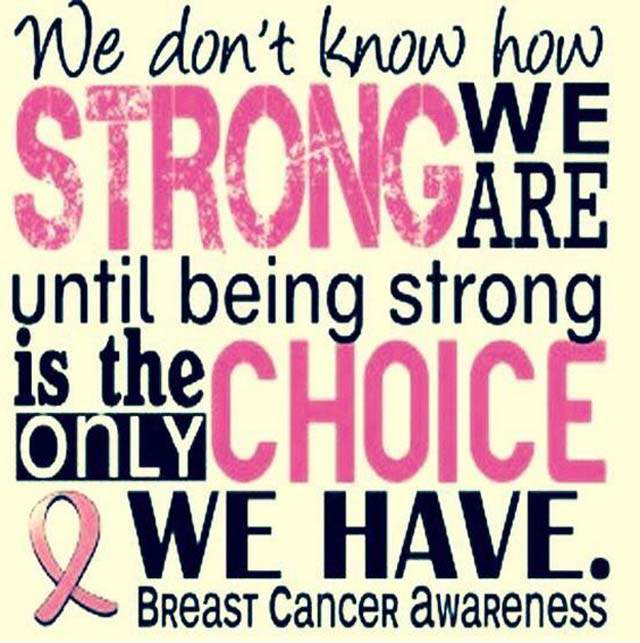
When “Awareness” Isn’t Awareness at All: Rethinking the Breast Cancer Meme
When Awareness Isn’t Awareness: Rethinking a Viral Breast Cancer Meme
One of the most compelling ideas I encountered in this chapter is the concept of cyberactivism. At its core, cyberactivism uses digital platforms to mobilize people toward a cause through awareness, emotional engagement, and ultimately, action (Strategic Social Media). It relies on diffusion to spread a message and mobilization to turn that message into meaningful behavior change.
That is what it is meant to do.
So what happens when something spreads rapidly, engages millions, and still fails to create awareness?
This is where I found myself thinking through the lens of binary opposition. In literary theory, we often understand something more clearly by examining what it is not. And in this case, the so-called “breast cancer awareness meme” becomes clearer when we consider the possibility that it was never truly about awareness in the first place.
Because awareness, by nature, is public.
This campaign operated through secrecy.
Women were asked to privately message one another and then publicly post vague or coded statuses such as their name paired with the color of their bra or phrases like “I like it on the floor.” The intention, explicitly stated, was to confuse men and keep them guessing.
So I began to ask myself: can something designed around confusion actually create awareness?
Awareness clarifies, it informs, and it invites understanding.
This campaign did something different. It sparked curiosity, created intrigue, and encouraged participation through an inside joke. It spread quickly because it was simple, playful, and required very little effort. In that sense, it succeeded as a diffusion strategy. People shared it, personalized it, and felt included in something that seemed collective and fun.
And yet, what exactly was being shared?
If someone encountered these posts without context, would they understand anything about breast cancer? Would they learn about prevention, early detection, or even who is affected by the disease?
Or would they simply feel confused?
This is where the distinction between going viral and creating awareness becomes important. Viral content captures attention. Strategic content connects that attention to a clear purpose. In this case, the connection feels unclear.
The campaign generated participation, although participation alone does not guarantee impact.
I also found myself reflecting on the content itself. The examples used throughout the campaign, including bra colors, purse placement, and references to hair length, carried strong undertones of humor and, at times, sexual innuendo. This raises another question: what does it mean to frame awareness around elements that may not reflect the lived realities of those affected by the disease?
Breast cancer is not only a medical condition. It is deeply personal. It affects identity, physical embodiment, and emotional well-being. Many individuals experience hair loss, mastectomies, and long-term changes to their bodies.
So how do we reconcile that reality with messaging that centers on bras, body references, and coded jokes?
Rather than framing this as a failure, I began to see it as a moment of misalignment. The strategy itself was effective in certain ways. It leveraged curiosity, exclusivity, and social participation. It reduced the barrier to entry, making it easy for individuals to engage. It created a sense of belonging.
At the same time, the message and the mission did not fully align and alignment is where mobilization happens.
When campaigns successfully create awareness, the purpose is visible. The audience understands what they are engaging with and why it matters. There is a clear pathway from attention to action, whether that involves learning more, donating, sharing resources, or starting conversations.
We see this in movements such as #MeToo or Black Lives Matter, where the message is immediately recognizable and grounded in lived experience. The diffusion of the message strengthens awareness, and that awareness contributes to broader social conversations and, in some cases, tangible change.
Even campaigns like The World’s Toughest Job demonstrate this alignment. They capture attention through storytelling, sustain it through emotional resonance, and leave the audience with a clear realization that reframes how they view motherhood. The message and the method work together.
So perhaps the more useful question is not whether the meme “worked,” but rather: what was it working toward?
If the goal was engagement, it succeeded and if the goal was awareness, the outcome becomes more complex.
This case study ultimately highlights an important distinction within social media strategy. Diffusion can amplify a message, although mobilization requires that message to be meaningful, clear, and connected to real-world outcomes (Strategic Social Media).
Without that connection, participation can feel momentary rather than transformative.
What I take away from this is not that viral campaigns are ineffective. In fact, they can be incredibly powerful. The key lies in intentionality. When the message, the medium, and the mission are aligned, awareness becomes more than visibility. It becomes understanding.
And perhaps that is the real difference.
Not everything that spreads creates awareness.
Some things simply spread.

Leave a comment